Aluminum Honeycomb Panels: The Allure of a Material Combining Design and Functionality, Vol. 2
Following our previous look at the iconic TEE table, we continue our exploration of designer Tomoya Tabuchi’s work with the TWIG bench. Like its predecessor, TWIG is centered around the innovative use of aluminum honeycomb panels.
デザインと機能を兼ね備えた素材の魅力 vol.2
前回に続き、デザイナー田渕智也氏が手がけたプロダクトに焦点を当てます。代表作「TEEテーブル」に続き、今回ご紹介するのは、同じくアルミハニカムパネルを主材とした「TWIG」ベンチです。
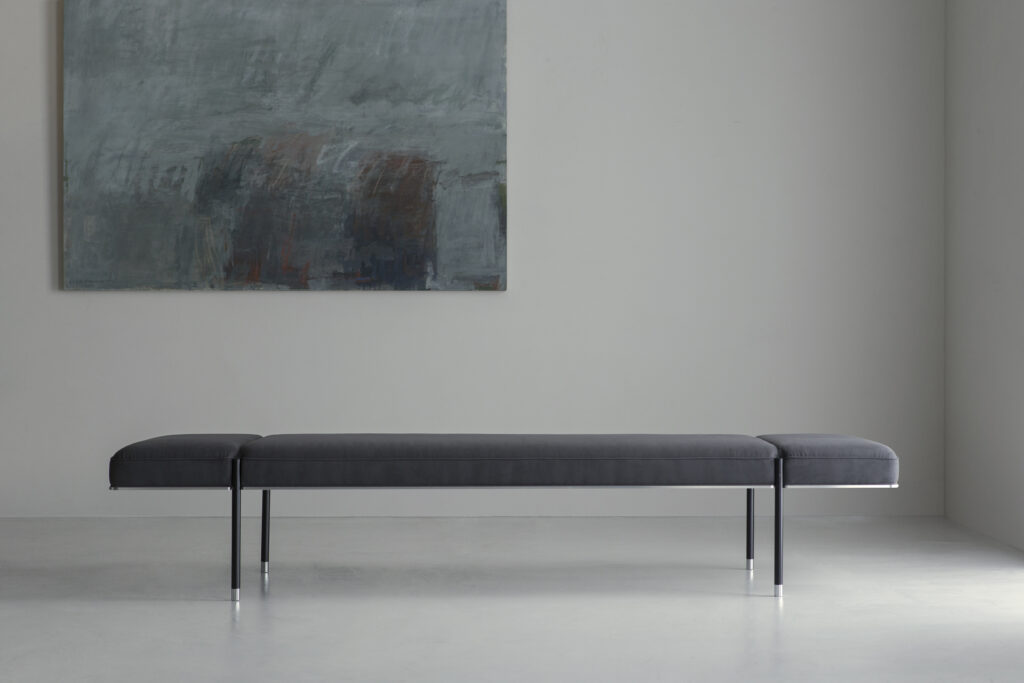
TWIG bench (2013)
The TWIG bench is characterized by its refined form, born from the application of the design philosophy behind our popular TEE table. Its unique base design—resembling an inverted TEE tabletop—emphasizes a sense of visual lightness and elegance.
In particular, the structure of the base beneath the seat is engineered to appear remarkably thin at the edges, creating a beautiful proportion that highlights the strength of the material while maintaining simplicity. Supported by slender steel legs, the voluminous cushion gives the impression of floating in mid-air, allowing it to blend naturally into contemporary, urban interiors.
「TWIG ベンチ」は、人気のティーテーブルのデザインを応用して生まれた、洗練されたフォルムが特徴のベンチです。ティーテーブルの天板を逆さまにしたような独自のベースデザインが、軽やかさとエレガンスを際立たせます。特に、座面下のベース部分は薄く見せる構造を取り入れており、シンプルでありながらもデザイン性を損なわない、美しいプロポーションが魅力です。
さらに、厚みのあるクッションが、華奢なスチール製の脚によってまるで浮遊しているかのような印象を与え、どのようなインテリア空間にも自然に馴染みます。視覚的にも軽やかで、置く場所を選ばないデザインは、現代的で都会的なスタイルを求める方にふさわしいベンチです。
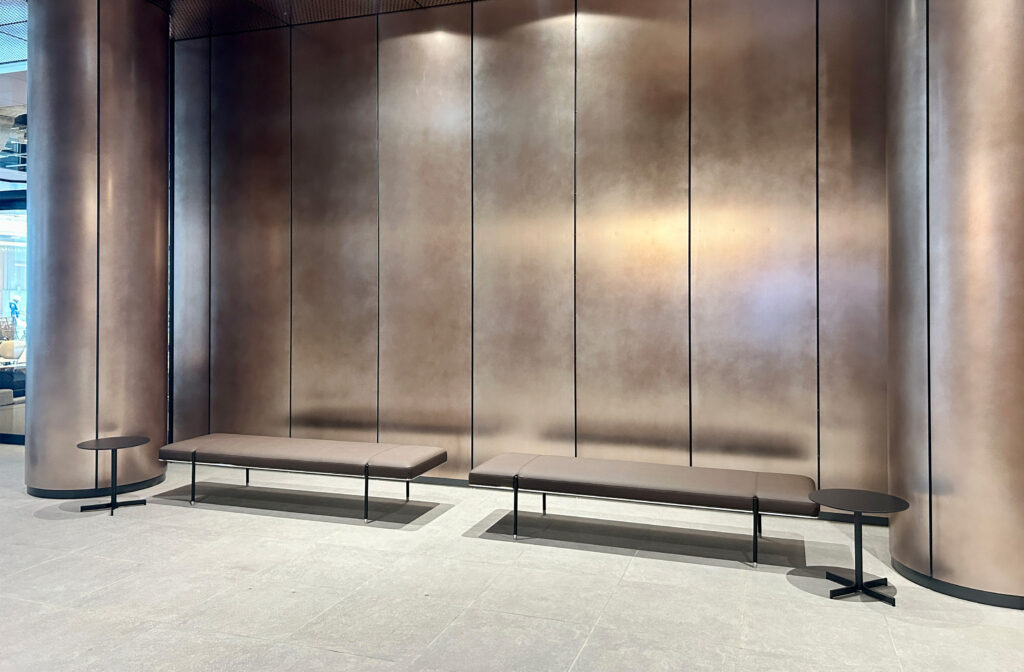
1. Harmony of Design and Comfort
The “weightless” aesthetic of the TWIG bench introduces a light rhythm to any room. Despite its delicate appearance, the substantial cushion offers an unexpectedly high level of comfort, achieving a perfect balance between artistic form and practical function.
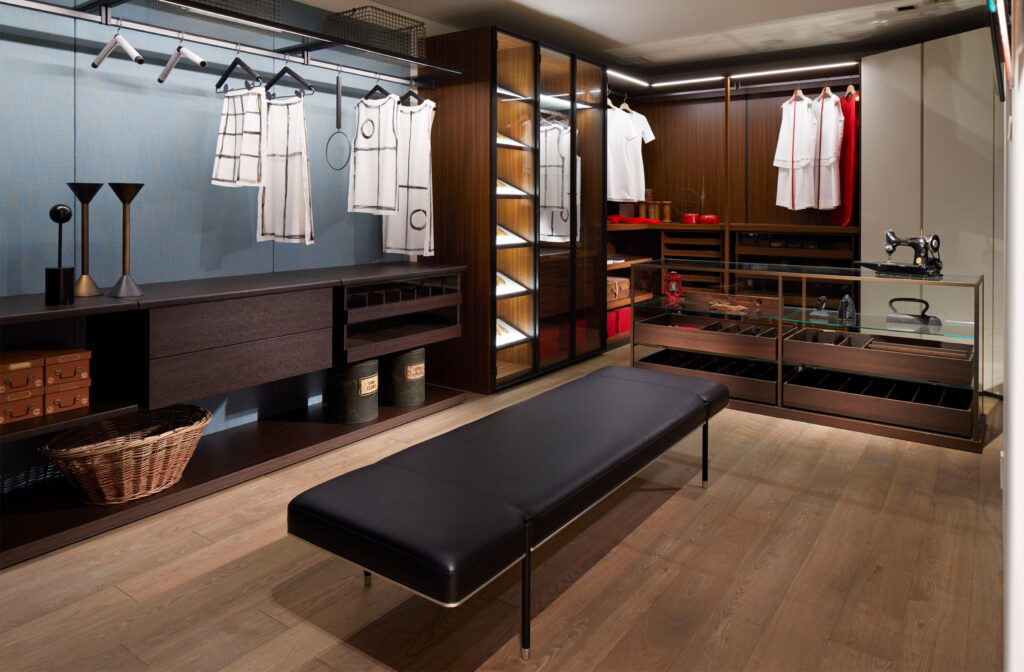
2. Versatile Functionality and Flexible Layout
Beyond its role as a bench, TWIG serves as a striking accent piece. Its ability to fit seamlessly into living rooms, bedsides, entrances, or office lounges provides the flexibility to adapt to various professional and residential environments.
3. Integration with Urban Minimalism
The thoroughly minimalist design, stripped of all excess, harmonizes beautifully with other furniture and art. It embodies our concept of “Silent Quality,” reducing visual noise to bring a sense of high-quality serenity to the space.
1.デザイン性と快適さの両立
「トゥイッグ」ベンチは、シンプルでありながらも独自のデザインが際立ちます。視覚的に浮遊感を与える座面は、空間に軽やかさをプラスしながら、厚みのあるクッションによる快適な座り心地も提供します。機能性と美しさが見事に調和したベンチです。
2.多用途で自由なレイアウト
ベンチとしての用途だけでなく、デザインチェアやアクセントピースとしても活躍します。オフィスやリビング、ベッドサイドやエントランススペースなど、さまざまな空間でスタイリッシュに活用でき、柔軟にレイアウトを変更することが可能です。
3.洗練された空間に調和
都会的でミニマルなデザインが特徴で、他の家具やインテリア、アートなどと組み合わせても自然に溶け込みます。